
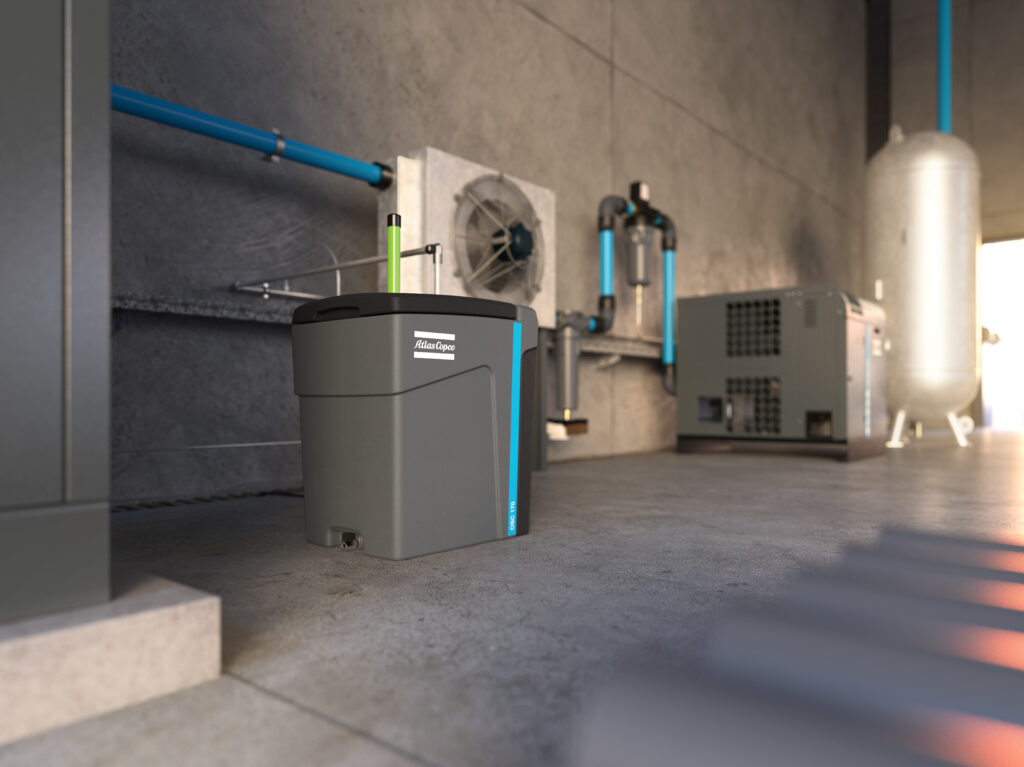
Learning about the roles and benefits of various compressor parts and ongoing maintenance concerns can be useful for compressed air users. Air compressors are vital to many supply chains, and downtime can have costly consequences. So, one crucial factor to understand is how the build-up of condensate which contains hydrocarbons and other contaminants can be hazardous and why it’s essential to handle it properly.
In an oil-injected compressor, the condensate can contain tiny oil particles alongside other contaminants and water. Water condensation occurs during the process of compressing air; the amount can vary depending on varying factors, such as the inlet conditions, ambient air temperature and humidity.
Depending on these conditions the amount of condensate can be significant. This can build up in the system if not efficiently removed which can cause corrosion to the internal surfaces of pipes and vessels.
Ignoring condensate management can cause ongoing problems. Some main issues include equipment damage, such as corroded pipes, air motors and valves.
Proper condensate management doesn’t have to be complicated; it’s a straightforward task with a few devices and some ongoing attention.
Condensate Drain
Condensate drains remove condensate manually or automatically. There is also a timer-based model that can be set to operate at certain times, but generally, a zero loss automatic drain may be the most efficient and least time-consuming option as it uses liquid-level sensors, ensuring compressed air isn’t wasted.
Oil/Water Separator
Once the condensate is removed from the system an oil and water separator should be used. This produces clean water, separated from the oil and other particles, which are then filtered into a special receiver. This device doesn’t have moving parts and needs minimal ongoing maintenance all whilst ensuring compliance with environmental law.
When it comes to disposing of hazardous waste, strict laws need to be followed to avoid fines and a damaged reputation. Owners of a compressed air system that uses oil-injected technology should be knowledgeable about proper disposal. Failure to comply with regulations can result in fines of up to £20,000. If you’re in need of extra support and maintenance to ensure you’re fully compliant, it’s wise to call in the experts.
Responsible condensate management is essential to ensure your compressed air system is reliable and efficient. An uninterrupted flow of air is important for operation, so it’s best to manage condensate before it becomes a major issue. By implementing treatment or drainage solutions, you can cut maintenance costs, and by adequately handling the condensate, you’re ensuring that you comply with environmental and legal regulations.
If you’re looking for an air compressor in Sussex and surrounding counties or require maintenance, get in touch.
All work is guaranteed, and customer service is always of the highest standard; why not try Airia today?
© Airia Ltd. All Rights Reserved. Registration: England No. 06864962. VAT Registration No. : 948 7359 63. Designed by Damteq®