
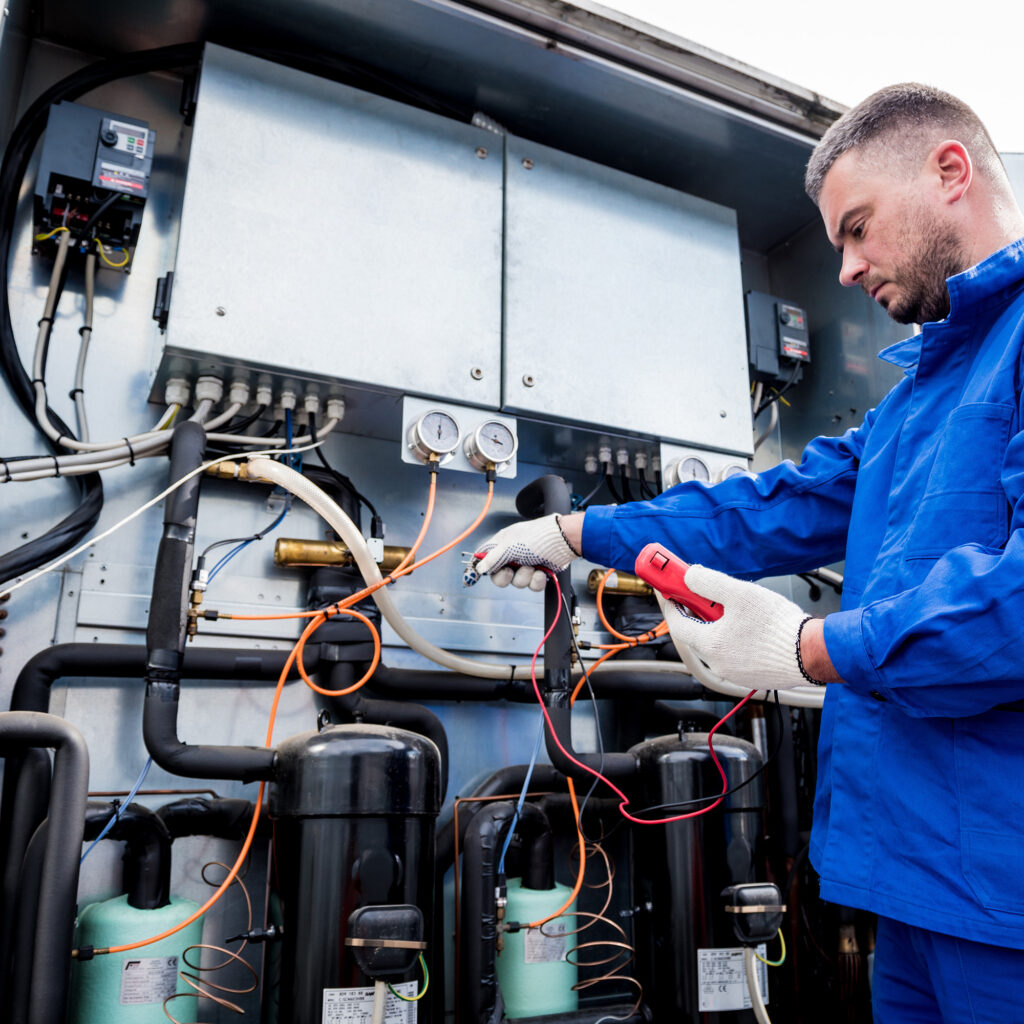
In systems that rely on the controlled movement of air or fluids (such as water), maintaining the correct flow is vital. That’s where non-return valves come in.
Also known as check valves, these components are designed to ensure flow moves in the right direction, preventing backflow that could damage equipment or reduce system efficiency.
Whether used in compressed air systems, water systems, or industrial processes, a non-return valve is a simple yet vital component that protects both performance and reliability.
A non-return valve is a small mechanical component that allows air or fluid to flow in one direction while automatically blocking it from flowing in the opposite direction. Unlike manually operated valves, it works without external control, responding solely to pressure changes within the system.
When pressure builds in the intended flow direction, the valve opens. If the flow reverses or the pressure drops, the valve closes to prevent backflow. This automatic operation makes non-return valves efficient and reliable across a wide range of applications.
In both industrial and commercial systems, preventing backflow is essential. Without a properly functioning non-return valve, systems can experience a range of issues:
By installing reliable non-return valves, these risks are significantly reduced, helping systems run smoothly and safely.
A check valve is used across a wide range of industries and systems, including sewer systems, manufacturing plants, pharmaceuticals, and food processing.
They are also commonly found in heating systems, industrial pipelines, and manufacturing environments where maintaining a consistent flow direction is critical. Check valves help prevent compliance and sanitation issues, playing a key role in countless daily operations.
In compressed air systems, the non-return valve helps maintain pressure and protect compressors from reverse airflow (which is vital for a clean, uninterrupted air supply). In water systems, they prevent contaminated water from flowing back into clean supplies.
Selecting the right non-return valve depends on factors such as pressure levels, flow rate, and the type of fluid or air being used. Different designs are available to suit specific applications, from spring-loaded valves for fast response to heavier-duty options for high-pressure systems.
There are three main types of check valves, each of which uses a slightly different mechanism:
Talking to an expert supplier is the best way to ensure you’ve chosen the correct valve.
Although often small, non-return valves play a crucial role in maintaining the efficiency and safety of fluid and air systems. By preventing backflow, they help protect equipment, reduce maintenance issues, and ensure consistent performance.
Working with a reliable supplier such as Airia ensures that the valve you choose is compatible with your system and delivers reliable long-term performance.
All work is guaranteed, and customer service is always of the highest standard; why not try Airia today?
© Airia Ltd. All Rights Reserved. Registration: England No. 06864962. VAT Registration No. : 948 7359 63. Designed by Damteq®